







































According to the National Literary Institute (NLI), In 2024, 21% of the adults in the U.S. are illiterate. 54% of adults in the U.S. have a literacy below a 6th grade level. The rates of literacy for everyone in the U.S. have been on a stable decline for many years.
For a long time, schools have been trying to inspire a love of reading into students. Silent reading, contests, and summer reading assignments have all been used in many schools throughout the country. One program has been used far and wide, even outside of the U.S.: Accelerated Reader (AR).
Renaissance’s Accelerated Reader Program is known, and sometimes loved, by many people. On their website, they claim the program, “motivates students to read more and read more widely”. A program like this sounds perfect for the falling literacy rates, but it also has its critics.
How does AR work?
AR was first developed in the 1990’s. The program has gone through hundreds of changes over the years, but the core system has remained consistent.
To begin, students will take a test to determine their reading level. The reading level is a range of numbers that are meant to show where a student will be the most comfortable while also being challenged by the book they read. Next, students select a book. All books in the program have a number assigned to them that corresponds to the student’s levels. Students must choose books that fit within their range. Books outside their range are typically not allowed to be used for the program, but some teachers may make an exception if the level is close to the student’s.
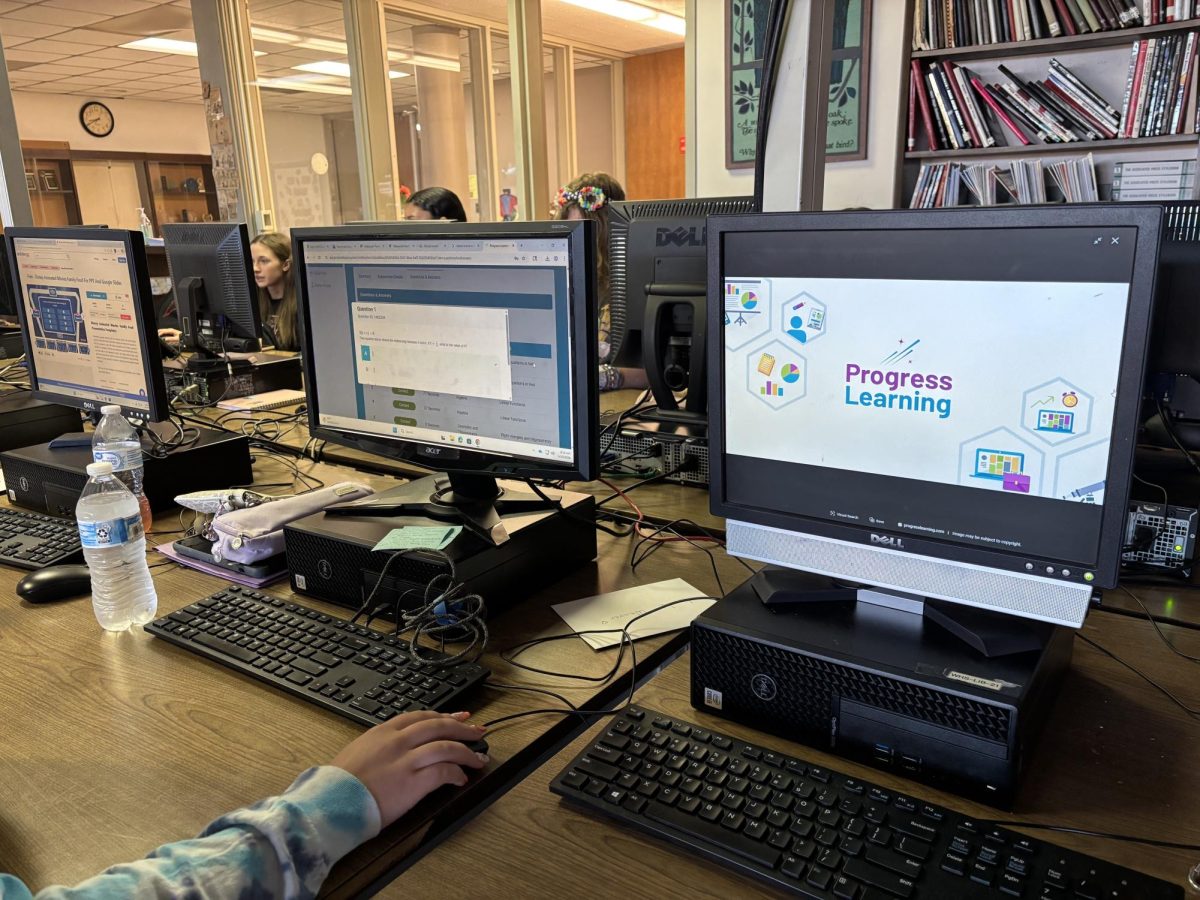
After student’s have read their books, they take a quiz made for the book on a computer or other device. Quizzes contain multiple choice questions, often asking for details in the story. The purpose of the quizzes is to ensure that students are reading what they claim to be reading.
Depending on the score, students will earn a selected amount of points from their book. Often, students have a goal of points they are required to reach each month. The goal is often used as a major grade for the student’s English class.
It should be noted that Renaissance does not recommend teachers give grades for AR reading practice. They do have a set of guidelines they recommend for teachers that must use it as a grade, which can be found here.
The Pros
Many students at Weir High had a pleasant experience with the AR program. Many students wrote that they felt the program had them reading more than they do now, and some even wrote that they enjoyed the tests AR had them taking.
Outside of Weir High, several studies were done that tested the program. One study, done by the Education Endowment Foundation, found that the program was most effective for helping students that struggled with reading catch-up with their peers.
One study, done in China by Fujia Yang and Beng Huat See, found that AR helped increase reading habits and outcomes of students learning English.
The Cons
Not every student at Weir High had a positive experience with AR. One student, Emma Salatino, was asked for her experience, and wrote, “Not fun. It’s boring and forcing us to read books we dislike kills the joy of reading and just makes it less enjoyable on our own time.” Many others are in agreement with her. Others reported feelings of stress, anxiety, and pressure from being forced to read certain books for a grade.
A common criticism of AR is the limited selection students are given. Not only are student’s limited to only reading books within their range, but many books lack an AR quiz for students to take. Renaissance does allow students and others to submit requests for quizzes. For a book to be considered, it needs to meet a list of requirements and follow some other considerations set by Renaissance. It should be noted that with these requirements books from smaller authors are less likely to receive a quiz.
Both of the previously mentioned studies mentioned school’s lacking resources as major obstacles to the program’s effectiveness. To produce the best results, a school is recommended to have a well-stocked library. This helps to add to the cost concerns of the program, a reason why some schools choose to abandon it.
All things considered, it’s little wonder why some students choose to cheat on AR. On social sites, such as Reddit and Tiktok, students can be found sharing answers for many AR quizzes. Since every question is multiple choice, which has been a criticism from educators for some time, sharing answers is very simple.
Conclusions
Over 50% of students at Weir High enjoy reading, and many have their own opinions on AR. While some people love it, and some people loathe it, AR is going to continue being used in many schools across America. The program produces both positive, negative, and null results. We can only hope that it’s able to continue helping people, and that the program will improve to help others in the future.